OFF에서 IN으로
1. 예고된 전환 — 2017년, 이미 쓰여 있던 이름
김태혁은 IN 시리즈를 이번에 처음 구상한 것이 아니다. 2017년 2nd Avenue 갤러리 개인전 도록을 제작하며, 그는 표지에 연필체로 "OFF·ON·IN"이라는 세 글자를 직접 적어 넣었다. 당시 그는 OFF 시리즈를 처음 도록화하는 시점에서 이미 자신의 작업이 OFF에 머무르지 않고 ON과 IN이라는 두 방향으로 계속 확장될 것임을 스스로에게 선언하고 있었다. 즉 IN 시리즈는 즉흥적 신작이 아니라, 작가 자신이 9년 전 예고한 시간표를 따라 도착한 결과다.
"그 당시 2017년에 벌써 저는 오프 시리즈를 하면서 앞으로 인 시리즈와 온 시리즈를 계속 지속할 거다는 걸 그때 그 카탈로그에 밝히고 있거든요."
2. 기법과 재료 — 목판화이되 '판화'로 규정되기를 거부하다
IN 시리즈는 기법적으로는 목판화(수성 목판)에 기반한다. 그러나 작가는 이를 '판화가로서의 작업'으로 소비되는 것을 명확히 경계한다. 그는 자신을 "판화가"가 아니라 "물감의 존재 방식을 탐구하는 작가"로 규정하고자 하며, IN 시리즈 역시 이 연장선 위에서 이해되어야 한다고 강조했다.
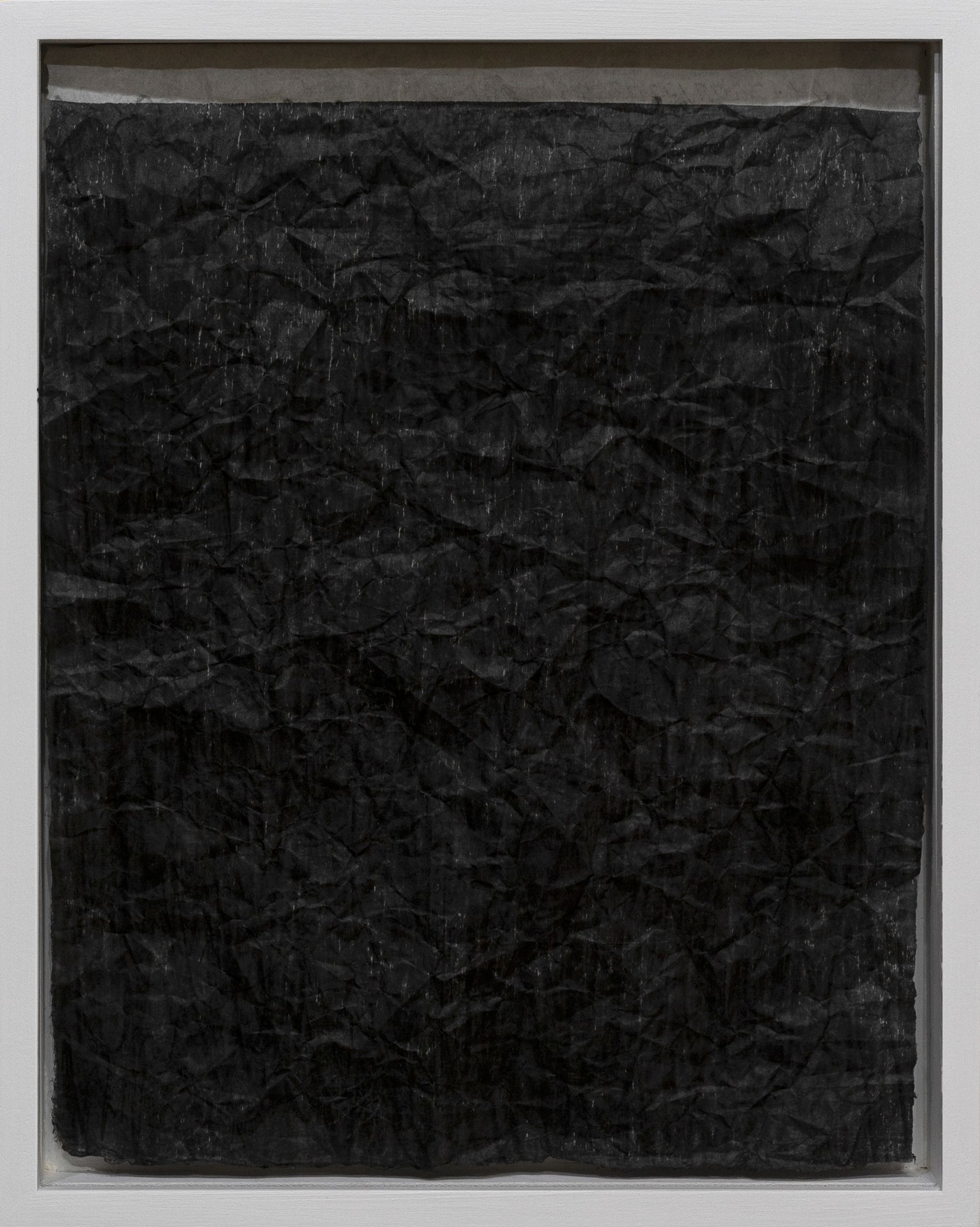
기법의 핵심은 전통 수성 목판(우키요에 계열)의 표면 처리 방식에 있다. 판 위에 아교와 명반(백반)으로 코팅 처리를 하는데, 이는 일본 스승이 "오리엔탈 코팅"이라 부르던 기법으로 일본 전문용어로는 礬水引き(どさびき, 도사비키)이다. 이 코팅이 된 상태에서 종이를 물에 적셔 인쇄하면, 물감이 종이 표면에 머무는 것이 아니라 마치 염색하듯 종이 안쪽으로 스며든다. 재료는 한지(韓紙)이며, 이번 출품작은 회색·검정 톤을 위해 먹(墨, sumi ink)을 사용했다.
"그 코팅을 한 상태에서 물에 적신 상태에서 인쇄를 하면은 물감이 종이 안에 스며들어서 표면에 있질 않고 안쪽에서 저 염색하듯이 안으로 스며들거든요."
이 기법은 일본 우키요에 수성 목판의 전통 기법을 베이스로 삼되, 그것을 재현하려는 것이 아니라는 점을 작가는 분명히 했다. 아교·명반을 이용한 표면 처리는 한국 동양화에서도 부분적으로 사용되지만, 이 정도로 전통적이고 체계화된 형태는 일본 우키요에 수성 목판 고유의 기법이며, 이 기술적 계보를 명시하는 것 자체가 다른 작가들과의 차별화 지점이라고 작가는 언급했다.
3. 핵심 개념 — "물감은 우리 주변 어디에 존재하는가"에 대한 세 번째 답
작가의 전 작업을 관통하는 단일한 질문 — "물감이 우리 주변 어디에 존재할 수 있는가" — 에 대해, OFF와 IN은 서로 대칭적인 답을 제시한다.
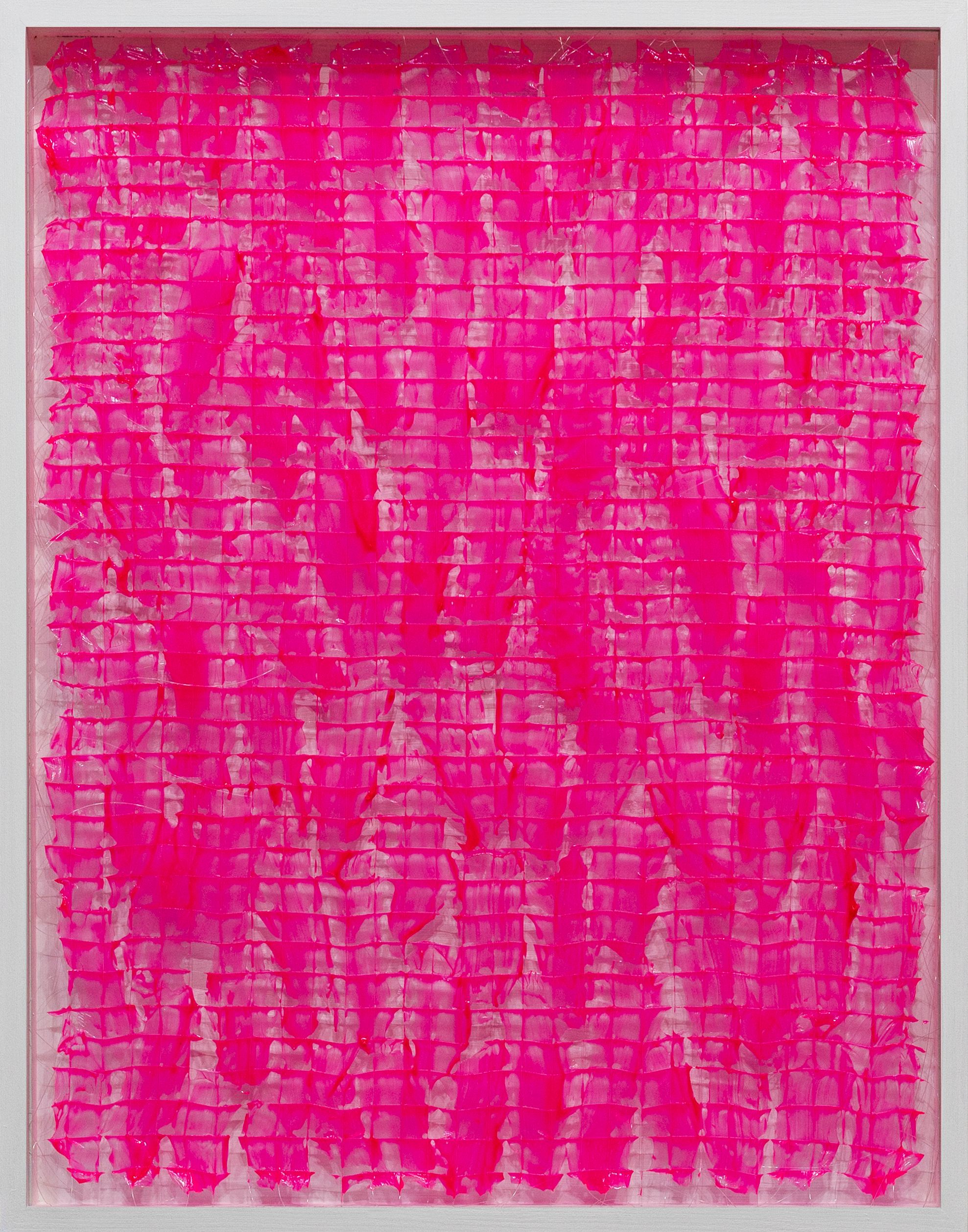
- OFF: 물감이 캔버스라는 지지체로부터 물리적으로 떨어져(이격되어) 부유하는 상태
- IN: 물감이 지지체(한지) 안으로 침투하여 존재하는 상태
"OFF 시리즈는 캔버스 지지체로부터 물감이 떠 있다면, 이번 IN 시리즈는 물감이 종이 안에 침투해서 존재하고 있다고 하는 의미를 가지고 있습니다."
작가는 이 침투 상태 자체도 자연의 점진적 변화의 일부로 느낀다고 밝혔다. 즉 IN은 OFF의 반대 극에 있는 상태가 아니라, 지지체-물감 관계라는 동일한 질문이 취할 수 있는 또 하나의 자연스러운 답변이라는 것이다.
4. 판화 경험과의 연결 — OFF 시리즈의 물리적 기원
작가는 이번 인터뷰에서, OFF 시리즈가 판화 경험 없이는 존재할 수 없었다는 점을 처음으로 명확히 언급했다. 이는 지금까지의 아카이브 자료에 없던 새로운 진술로, 향후 Vol.1 비평 챕터에 반드시 반영되어야 할 내용이다.
- 분리(separation)의 경험: 판화를 찍은 뒤 종이를 판으로부터 살짝 떼어내는 행위 — 이 물리적 분리의 과정 자체가 OFF 시리즈의 제작 과정 안에 내재되어 있다고 작가는 말한다.
- 여백(空白)의 경험: 다색 목판(5~6판)을 사용할 때, 초판을 찍고 나면 화면 베이스 위에 색 하나만 놓이며 자연스럽게 여백이 발생한다. 동양적 감각에서 이 여백은 '공간'으로 인식되며, 이 초판 인쇄 직후의 종이색과 컬러의 관계가 OFF 시리즈에 그대로 재현되고 있다고 작가는 밝혔다.
"알고 보면 김태혁이라고 하는 작가는 판화를 경험하지 않았으면 절대 OFF 작업을 만들 수가 없었을 것이다."
이는 기존 비평문에서 다루었던 "판화 실습실의 물성 체험"이라는 일반적 서술을, "분리"와 "여백"이라는 두 개의 구체적 조형 기제로 한층 정밀화할 수 있는 진술이다.
5. 철학적 배경의 변화 — 인연설에서 자연의 순환으로
작가는 초기(1990년대, 일본 유학 초기 대학원 시절) 자아의 문제를 다룰 때는 불교의 인연설과 윤회사상 — 결국 돌고 돈다는 사유 — 에 기대었다고 밝혔다. 그러나 2000년대 이후 작업이 변화해 오면서, 이러한 불교적 개념은 저변에 내재되어 있을 뿐 작품과 직접적·표면적으로 연결되지는 않는다고 스스로 정리했다.
대신 작가는 OFF·ON·IN이라는 타이틀은 '형식'에 관한 이야기이고, 그 내용적 측면은 일관되게 자연의 순환이라고 구분했다. 자연이 생성되고 발전되고 진화해 가는 과정은 점진적인 변화가 사이클처럼 돌고 도는 것이며, 이것이 작품의 내용적 핵심이라는 것이다.
"지금 자연에 대한 이야기가 내용적이라면, 저는 OFF·ON·IN은 사실 형식에 대한 이야기지 않겠습니까."
이 구분(형식=OFF/ON/IN, 내용=자연의 순환)은 향후 도록 텍스트에서 시리즈명과 철학적 테마를 명확히 위계화하는 데 유용한 기준이 될 수 있다.
5-1. 네트워크로서의 IN — 보이지 않는 섬유의 그물망
Vol.1 비평문(「지지체를 이탈하는 회화」)에서는 <OFF> 시리즈의 그물망을 들실·날실이 교차하는 매듭 구조로 읽고, 이를 연기(緣起)와 디지털 네트워크가 겹쳐지는 지점으로 분석한 바 있다. 이 네트워크 독법은 <IN> 시리즈에도 그대로, 그러나 정반대의 방식으로 적용될 수 있다.
한지(韓紙)는 그 자체로 닥나무 섬유가 얽혀 짜인 그물망이다. <OFF>의 네트워크가 육안으로 보이는 거시적·기하학적 격자(플루오로카본 라인)라면, <IN>의 네트워크는 육안으로 보이지 않는 미시적·유기적 격자(종이 섬유)다. 礬水引き(도사비키) 코팅은 이 눈에 보이지 않는 섬유 네트워크의 투과성(porosity)을 조절하는 기법이며, 물감이 "스며든다"는 것은 곧 안료가 이 미시적 그물망의 틈새와 교차점 사이로 흡수되어 자리 잡는다는 뜻이다.
이렇게 보면 OFF와 IN은 대칭적인 두 개의 네트워크 회화로 재정의된다.
- OFF: 가시적 네트워크 위에 물감이 얹힘 — 네트워크가 물감을 떠받치는 무대(stage)
- IN: 비가시적 네트워크 안으로 물감이 흡수됨 — 네트워크가 물감을 감싸는 매질(medium)
두 시리즈 모두 지지체의 정체가 결국 "그물망"이라는 점에서 동일한 존재론적 뿌리를 공유하지만, 그 그물망이 드러나는 방식(가시/비가시, 기하학적/유기적, 표면/내부)에서 정반대의 극을 이룬다. 이는 김영호 평론가가 제시한 "네트워크" 독법이 OFF 한 시리즈에 국한되지 않고, 지지체와 물감의 관계성이라는 작가의 전 작업을 관통하는 근본 구조임을 보여주는 근거가 된다.
6. 발표 이력 — 울산에서의 시험적 출품, 그리고 이번이 대중 앞 첫 공개
IN 시리즈는 이번이 완전히 새로운 시도는 아니다. 울산국제목판화비엔날레에 2019년과 2024년 두 차례 모두 IN 시리즈 작품을 출품한 이력이 확인되었다. 다만 당시에는 작품명을 "IN"으로 표기하지 않고 각각 OFF와 WP로 표기해 출품했다. 즉 IN 시리즈에 해당하는 작품 자체는 이미 존재했지만, 시리즈명을 대중에게 명시적으로 밝힌 적은 없었다. 그러나 작가 스스로 밝혔듯, 이번 국제아트페어(TSUBAKI Gallery 부스)가 IN이라는 시리즈명으로 대중에게 처음으로 본격 공개되는 자리다.
"이번 아트페어 때 사실은 처음으로 대중한테 IN 시리즈를 보여주는 거거든요."
1. A Foreseen Transition — A Name Already Written in 2017
The IN series was not conceived on the spot for this exhibition. While producing the catalogue for his 2017 solo exhibition at 2nd Avenue Gallery, Kim Taehyuk wrote the three words "OFF · ON · IN" on the cover in his own pencil hand. At the time — while cataloguing the OFF series for the very first time — he was already declaring to himself that his practice would not remain fixed on OFF, but would continue to expand in two further directions: ON and IN. The IN series, then, is not a spontaneous new work but the arrival point of a timetable the artist laid out for himself nine years earlier.
"Even back in 2017, while I was working on the OFF series, I had already stated in that catalogue that I would go on to continue with the IN series and the ON series."
2. Technique and Material — Woodblock in Method, Yet Resisting the Label of "Printmaking"
Technically, the IN series is grounded in woodblock printmaking, specifically the water-based woodblock method. Yet the artist is careful to resist having this work consumed as "the work of a printmaker." He wishes to define himself not as a "printmaker" but as "an artist investigating the modes in which paint can exist," and insists that the IN series must be understood as an extension of that same inquiry.
The technical core lies in the surface-treatment method of traditional water-based woodblock printing in the ukiyo-e lineage. The block is coated with a mixture of animal glue and alum — a technique his Japanese teacher called "Oriental coating," known in Japanese by the technical term 礬水引き (dosabiki). Once this coating is applied, the paper is dampened with water before printing; as a result, the pigment does not remain on the surface of the paper but soaks inward, as though dyeing it from within. The support material is Korean hanji paper, and for this exhibition, sumi ink (墨) was used to achieve the grey and black tonal range.
"Once that coating is applied and the paper is dampened with water before printing, the pigment doesn't sit on the surface — it soaks inward, as if being dyed from within."
The artist was explicit that while this technique is based on the traditional water-based woodblock method of Japanese ukiyo-e, it is not an attempt to reproduce ukiyo-e itself. Surface treatment using animal glue and alum is used to some extent in Korean traditional painting (dongyanghwa) as well, but this fully systematized, traditional form of the technique belongs specifically to the lineage of Japanese ukiyo-e water-based woodblock printing — and naming this technical genealogy explicitly is itself, the artist noted, a point of differentiation from other artists.
3. The Core Concept — A Third Answer to "Where Can Paint Exist Around Us?"
To the single question running through the artist's entire body of work — "Where can paint exist around us?" — OFF and IN offer two symmetrically opposed answers.
- OFF: A state in which paint is physically detached from — floating away from — its canvas support
- IN: A state in which paint exists by penetrating into its support (hanji paper)
"If the OFF series is paint floating away from its canvas support, this IN series carries the meaning of paint existing by penetrating into the paper."
The artist stated that he experiences this state of penetration, too, as part of nature's gradual transformation. In other words, IN is not positioned at the opposite pole from OFF, but is simply another natural answer that the same underlying question — the relationship between support and paint — can take.
4. The Link to Printmaking Experience — The Physical Origin of the OFF Series
In this interview, the artist stated for the first time, and unambiguously, that the OFF series could not exist without his printmaking experience. This is a new statement not present in the archive to date, and one that must be incorporated into the Vol.1 critical essay going forward.
- The experience of separation: After a print is pulled, the paper is gently peeled away from the block. The artist states that this very act of physical separation is embedded within the production process of the OFF series itself.
- The experience of blank space (空白): When working with multi-color woodblock printing (five to six blocks), once the first block is printed, only a single color sits atop the base of the composition, and a blank space naturally emerges. In the East Asian sensibility, this blank space is perceived as "space" itself — and the artist revealed that this exact relationship between the paper's ground color and the printed color, immediately after the first impression, is reproduced directly within the OFF series.
"If you trace it back, an artist named Kim Taehyuk could never have made the OFF work without having gone through the experience of printmaking."
This statement allows the general description found in earlier critical writing — "the material experience of the print studio" — to be sharpened into two specific formal mechanisms: "separation" and "blank space."
5. A Shift in Philosophical Background — From Dependent Origination to the Cycle of Nature
The artist stated that in his early years — during his graduate studies in Japan in the 1990s, when he was grappling with questions of the self — he leaned on the Buddhist concepts of dependent origination (因緣) and the cycle of rebirth (輪廻): ultimately, the idea that all things turn and return. However, as his work evolved from the 2000s onward, he came to understand these Buddhist concepts as underlying substrates rather than as ideas directly or overtly tied to the work itself.
Instead, the artist draws a clear distinction: the titles OFF · ON · IN concern form, while the consistent thematic content beneath them is the cycle of nature. The process by which nature is generated, develops, and evolves is, in itself, a gradual transformation that turns like a cycle — and this, he states, is the thematic core of the work.
"If the discourse on nature is about content, then OFF · ON · IN is, in fact, a discourse about form, isn't it?"
This distinction — form as OFF/ON/IN, content as the cycle of nature — can serve as a useful criterion for clearly hierarchizing series names and philosophical themes in future catalogue texts.
5-1. IN as Network — The Invisible Web of Fiber
The Vol.1 critical essay ("Painting in Exodus from Its Support") reads the net of the OFF series as a knotted structure of warp and weft threads, analyzing it as a point where dependent origination (緣起) and digital networks converge. This network reading can be applied to the IN series as well — in precisely the opposite mode.
Hanji paper is, in itself, a net woven from interlaced mulberry-bark fibers. If the network of OFF is a macroscopic, geometric grid visible to the naked eye (the fluorocarbon line), then the network of IN is a microscopic, organic grid invisible to the naked eye (the paper's fiber structure). The 礬水引き (dosabiki) coating is precisely the technique that regulates the porosity of this invisible fiber network; for paint to "penetrate" means that the pigment is absorbed and lodged within the gaps and intersections of this microscopic web.
Seen this way, OFF and IN can be redefined as a symmetrical pair of network paintings:
- OFF: Paint rests atop a visible network — the network as a stage that bears the paint
- IN: Paint is absorbed into an invisible network — the network as a medium that envelops the paint
Both series share the same ontological root — the support is, in the end, always a net — yet stand at opposite poles in how that net is manifested: visible versus invisible, geometric versus organic, surface versus interior. This confirms that the "network" reading proposed by critic Kim Young-ho is not confined to the OFF series alone, but constitutes a foundational structure running through the artist's entire body of work, organized around the relationship between support and paint.
6. Exhibition History — A Trial Showing in Ulsan, and This Exhibition's First Public Unveiling
The IN series is not being attempted here for the first time. It has been confirmed that works corresponding to the IN series were exhibited at the Ulsan International Woodcut Biennale on two occasions, in 2019 and 2024. At the time, however, these works were not labeled "IN" — they were exhibited under the titles OFF and WP respectively. In other words, works corresponding to the IN series already existed, but the series name itself had never been explicitly announced to the public. As the artist himself stated, this international art fair (the TSUBAKI Gallery booth) marks the first time the series is being unveiled to the public under the name "IN."
"At this art fair, this is actually the first time I'm showing the IN series to the general public."